Articles
-

What is the Difference Between Credit and Debit? with Examples
In the world of accounting and finance, understanding the meaning of credit and debit is essential for anyone dealing with financial or accounting matters. What is credit and what is debit? This fundamental question leads to a deep understanding of the accounting principles that govern the business and commercial world. Credit refers to entries that increase liability, equity, and revenue accounts, while debit refers to entries that increase asset and expense accounts.
-

What is Inventory Count and Inventory Management?
Inventory management is considered one of the most important fundamental operations in any commercial or industrial enterprise, as it directly affects profitability and operational efficiency. Inventory count, being the central process in inventory management, plays a crucial role in ensuring financial data accuracy, cost control, and improving decision-making processes.
-
Cost to Start a Finishing Contracting Company in KSA
The cost of establishing a finishing contracting company in Saudi Arabia ranges from 200,000 SAR for startups to 2.5 million SAR for large specialized firms. The finishing and decor sector in Saudi Arabia is growing at an annual rate of 12%, driven by the construction boom and new housing projects, making it a lucrative investment opportunity for specialists in interior finishing works.
-

How to Calculate End-of-Service Benefits in Saudi Arabia
End-of-service benefits are one of the most important legal rights guaranteed by Saudi labor law for employees in the private sector, representing financial compensation for the years of service an employee has spent with an organization. The amount of this benefit varies depending on the length of service and the manner in which employment ends, whether through resignation or termination by the employer. In this article, we review in detail how to calculate end-of-service benefits according to Saudi labor law, with illustrative examples and answers to frequently asked questions.
-

What is Return on Investment? Calculation Methods, Importance, and Benefits
In the world of investment and business, investors and business leaders are constantly searching for effective ways to measure the success of their investments and make informed financial decisions. Return on Investment (ROI) emerges as one of the most important financial indicators that helps achieve this goal. In this comprehensive guide, we will explore the concept of Return on Investment in detail, learn how to calculate it step by step, and understand its importance in making wise financial decisions. We will also explore its advantages and disadvantages, and answer the most common questions about this vital financial concept that every investor and business manager needs to ensure the success of their projects and investments.
-

What is CIA Certification - Certified Internal Auditor: Complete Guide
With the increasing complexities in modern business environments and escalating institutional risks, the need for qualified and certified internal auditors has become more urgent than ever before. In this context, **CIA certification** emerges as one of the most important professional qualifications that ensures specialists excel and succeed in the field of internal auditing.
-

Guide to Accounting Firms in KSA: Types, Services, and Pricing
In this article, we will explore the types of accounting companies accredited by the Saudi Organization for Certified Public Accountants (SOCPA), the differences between categories of accounting firms in Riyadh and other cities in the Kingdom, in addition to average service prices, and how digital solutions like Mezan can provide modern and effective alternatives.
-

Withholding Tax in KSA: Guide for Businesses and Individuals
Saudi Arabia's withholding tax (WHT) system is a critical compliance requirement for businesses operating in the Kingdom. Whether you're a multinational corporation, SME, or individual service provider dealing with non-resident payments, understanding WHT regulations can save you significant penalties and optimize your tax position.
-

Penalties for Non-Compliance with the E-Invoicing System in KSA
With the rapid technological development and Saudi Arabia's Vision 2030, the Saudi government seeks to modernize tax systems and implement the e-invoicing system as part of the digital transformation program. This system aims to enhance transparency, facilitate e-commerce, and improve the efficiency of tax procedures. However, non-compliance with this system carries serious consequences for companies and individuals.
-
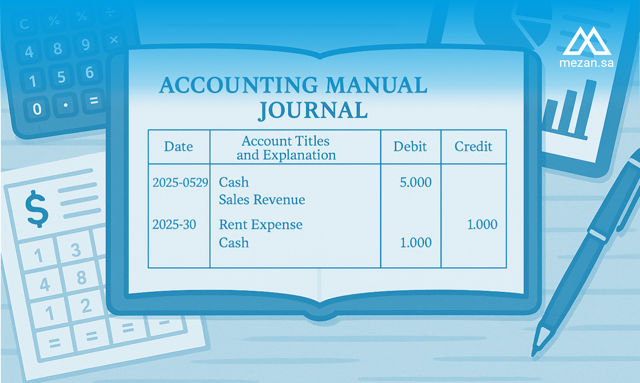
Manual Journal Entries: Complete Guide with Examples - Mezan
Daily journal entries are among the most important accounting elements that every small and micro-business owner must master. These entries form the backbone of the accounting cycle and are recorded in the journal book as a fundamental first step before transferring them to the general ledger. Understanding journal entries helps business owners manage financial transactions with accuracy and efficiency.
-

How to Inquire About Payment Orders
Payment orders are an essential financial tool used in various countries to settle financial obligations, whether between individuals, companies, or government and private entities. These orders are official instructions issued to transfer funds through banking systems or electronic platforms, such as digital payment systems or government service portals. With the global spread of electronic services, inquiring about payment orders has become a simple process conducted through smartphone applications, websites, or banking services. In this comprehensive guide, we will learn about what payment orders are and their importance, review methods of inquiring about them in both government and private sectors, explain detailed steps and best practices for tracking them, and answer frequently asked questions about them.
-
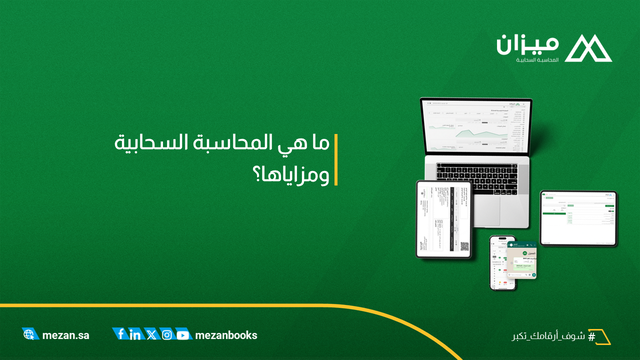
What is Cloud Accounting, Its Advantages, and How to Choose the Right Software?
In the rapidly evolving business world, relying on traditional accounting software installed on computers has become an obstacle to flexibility and efficiency. Cloud accounting offers a modern solution that allows you to manage your financial accounts from anywhere at any time, while providing advanced security and lower costs. In this comprehensive guide, we cover everything you need to know about cloud accounting: from its basic definition, to its practical advantages, the differences between it and traditional systems, all the way to the essential criteria that help you choose the right cloud software for your business needs.